by Harriett Richardson | Apr 14, 2026 | FAAM
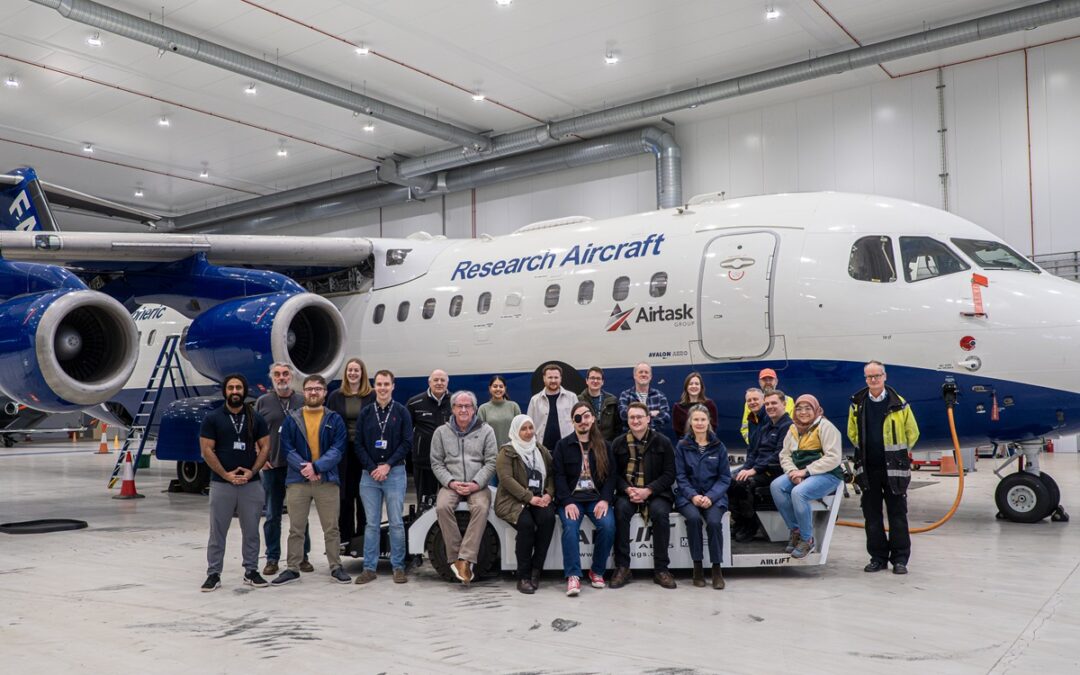
The National Centre for Atmospheric Science can confirm that the FAAM Airborne Laboratory has now formally closed and all operational activity ended on 31 March 2026 – following the UKRI-NERC funding withdrawal. We continue to work with UKRI-NERC, our host...
by Eleanor Dixon | Mar 4, 2026 | FAAM, Mid-Life Upgrade
Following the withdrawal of funding by UKRI-NERC, announced on Thursday 26 February 2026, the FAAM Airborne Laboratory will cease operations at the end of this financial year. There is now significant work required in the coming weeks to understand what this...
by Harriett Richardson | Feb 27, 2026 | FAAM, Mid-Life Upgrade
Following the withdrawal of funding by UKRI-NERC, announced on Thursday 26 February 2026, the FAAM Airborne Laboratory will cease operations at the end of March 2026. UKRI have been the custodians of UK airborne science and monitoring since 2014, but the closure marks...
by Eleanor Dixon | Dec 3, 2025 | FAAM
We are replacing fire extinguishers on board the FAAM Airborne Laboratory’s atmospheric research aircraft to comply with a government directive aimed at reducing ozone depleting substances (ODS). What’s involved in replacing our fire extinguishers? Despite our...
by Eleanor Dixon | May 15, 2025 | FAAM, Missions
Scientists are looking at how pollutants from aircraft could be reduced by using sustainable aviation fuel. Teams from the FAAM Airborne Laboratory, universities, research centres and aerospace companies are working together on a “chase” experiment, the first of its...
by Eleanor Dixon | Jan 29, 2025 | FAAM
On 14 January 2025 the FAAM Airborne Laboratory’s atmospheric research aircraft reached a milestone of 10,000 hours of flying over the course of its lifetime. Our research aircraft in its first days as the BAe 146-100 demonstrator model, with its original livery. It...

